Thursday, October 11, 2012

The Most Difficult Word in Scripture

Quoting Dr. Martin Luther; written down by Veit Dietrich at Luther's table in the fall of 1531:
I wonder whether Peter, Paul, Moses, and all the saints fully and thoroughly understood a single word of God so that they had nothing more to learn from it, for the understanding of God is beyond measure. To be sure, the saints understood the Word of God and could also speak about it, but their practice did not keep pace with it. Here one forever remains a learner. The scholastics illustrated this with a ball which only at one point touches the table on which it rests, although the whole weight of the ball is supported by the table.

Though I am a great doctor, I haven’t yet progressed beyond the instruction of children in the Ten Commandments, the Creed, and the Lord’s Prayer. I still learn and pray these every day with my Hans and my little Lena. Who understands in all of its ramifications even the opening words, ‘Our Father who art in heaven’? For if I understood these words in faith—that the God who holds heaven and earth in his hand is my Father—I would conclude that therefore I am lord of heaven and earth, therefore Christ is my brother, therefore all things are mine, Gabriel is my servant, Raphael is my coachman, and all the other angels are ministering spirits sent forth by my Father in heaven to serve me in all my necessities, lest I strike my foot against a stone. In order that this faith should not remain untested, my Father comes along and allows me to be thrown into prison or to be drowned in water. Then it will finally become apparent how well we understand these words. Our faith wavers. Our weakness gives rise to the question, ’Who knows if it is true?’ So this one word ‘your’ or ‘our’ is the most difficult of all in the whole Scripture. It’s like the word ‘your’ in the first commandment, ‘I am the Lord your God’ [Exod. 20:2].
Luther, M. (1999, c1967). Vol. 54: Luther's Works, vol. 54 : Table Talk (J. J. Pelikan, H. C. Oswald & H. T. Lehmann, Ed.). Luther's Works (54:III-10). Philadelphia: Fortress Press.


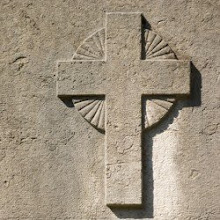
photo credit: moria

Wednesday, October 10, 2012

Listen to Lutheran Public Radio

Did you know, that while you're reading this, you could be reading it while listening to sacred music?  Listen to Lutheran Public Radio 24/7:

http://lutheranpublicradio.org/

Tuesday, October 9, 2012

The Liturgy: A Two-way Street Based on Christ

Quoting from Pastor Bill Cwirla's article "The Law and the Gospel in the Liturgy":
The Liturgy runs in both a "sacramental" and a "sacrificial" direction. God justifies man sacramentally, and justified man serves God sacrificially. God speaks his Word and as his Word has its mortifying and vivifying way with us, we speak to God and to one another. God opens our lips, and our mouths declare his praise (Ps 51:15).
Jesus Christ always remains the center and focus in the liturgy, whether we are speaking sacramentally or sacrificially. Through Jesus Christ, the Father bestows forgiveness, life, and salvation by the Holy Spirit who works through the Word. And through the same Jesus Christ, the church renders her thanks and praise sacrificially to the Father in the Holy Spirit. In both directions, Jesus Christ is the mediator between God and man (1 Tim 2:5).
Where sacrament and sacrifice are confused, there will be a corresponding confusion of the Law and the Gospel. Worship that is focused on our prayer, praise, good works, love, caring, outreach, mission, stewardship, and sanctification instead of on Christ's saving death and resurrection, is focused on the Law and not the Gospel. Sacrifice without sacrament is Law without Gospel. To worship God according to the Law is idolatry, even if the God whom we are worshiping is the one, true God.
This distinction of sacrament and sacrifice provides a Christocentric litmus test for worship. If what is said, sung, or preached in the liturgy could be said, sung, or preached had Jesus Christ never died on the cross and rose from the dead for the salvation of the world, then that worship is not uniquely Christian. The sacrificial death of Jesus for the life of the world is the essential, core of the Liturgy. "For as often as you eat of this bread and drink of this cup you proclaim the Lord's death until he comes" (1 Cor 11:26).

Monday, October 8, 2012

We’re So Serious About Being Church We’re Going to Cancel Church!

Notice the difference? 

Rev. Terry Tieman, head of the Transforming Churches Network (TCN), from his blog post titled “3 BIG IDEAS (AND 2 SMALL ONES) ON REVITALIZATION: WHAT I’VE LEARNED FROM 500 CHURCHES IN 5 YEARS!,” written in 2012:
Shorten or Cancel Worship [for Service Project Sunday]. Whoa! Are you kidding? No, because this demonstrates that you are serious about being the church “in” your community and that you care about your “neighbors” around you. If it’s too uncomfortable to completely cancel your formal service(s), then shorten or provide an alternative on Saturday or Sunday evening. 
Dr. Martin Luther, reformer, from his Heidelberg Disputation, written in 1518:
THESIS 21. A theologian of glory calls evil good and good evil. A theologian of the cross calls the thing what it actually is. (LW, v. 31, IV)  

Read more about the Transforming Churches Network by downloading Scott's article on TCN here.

photo credit: Lawrence OP 

Friday, October 5, 2012

To Damnation and Back

Cheryl and I ventured out on an impromptu road trip, heading southbound through Oregon and northern California.  We spent our first night in "Track Town USA," Eugene, Oregon.  We saw Hayward Field, where the legendary Steve Prefontaine once ran for the University of Oregon.  Heading south, we circumnavigated Crater Lake. We spent the next night in Medford, Oregon, and had an enjoyable dinner with the legendary theological game show host Pastor Evan Goeglein, of Table Talk Radio fame. The next day we headed southwest towards northern California, hiking through the redwoods down to the coast, and then driving the coast northwards on U.S. 101 to Coos Bay, Oregon, where we bunked for the night. The next day we hiked the sand dunes of the coast, and then headed for McMinnville to visit the Evergreen Air & Space Museum before heading home. If you're into aviation, it's be worth the trip. Here's a few photos.

              Crater Lake from the north rim. It's the deepest lake in the U.S. at 1,949 feet.

        That's incredibly blue water! Click on the photo and take a close look at the shoreline.

The laked formed after the collapse of an old volcano. The little cone called Wizard Island formed from a subsequent eruption.

                                      Mt. Thielsen on the horizon in the distance.

Many of you may not recognize this guy hermaphrodite, the banana slug. They're quite common on the west coast, often munching on the leaves of your garden. Note the iridescent dried slug slime.

We came across these National Park Service workers while hiking the Damnation Trail from U.S. 101 down to the coast, about 2 1/2 miles one way and a 1,000 foot elevation change. A redwood had fallen across the trail. They'd been there for a day-and-a-half already, working on getting it off the trail. When we climbed back out, they had a section of the tree cut out so we could walk on the trail between the remaining portions of the trunk. This was a little tree - only about five feet in diameter. The Husqvarna-wielding man in the orange chaps is on top of the tree's trunk.

               Cheryl is dwarfed by redwood giants as they pierce the low-hanging clouds.

Sand dunes inhabit much of the Oregon coast. Here on the John Dellenback Trail they extend in nearly two miles from the beach.

Thursday, October 4, 2012

Good Fortune?

This quote of 20th century Lutheran theologian Herman Sasse comes from the We Confess Anthology, in the "Jesus Christ is Lord" section. The excerpt comes in the midst of a superb discussion on the theology of the cross. For me, this quote is strangely comforting. I've seen too many friends and relatives suffer, yet even in all these things, God is there. He hides Himself where we may not think to look.
What human wisdom considers good fortune and therefore strives for— health, success, affluence—these things God in His wisdom may see as harmful for a person’s good and so deny them. In God’s judgment sickness, failure, and poverty may be far better. And God’s judgment is not mistaken, even when it contradicts all human reason. There can be no good, as we see things, in someone lying for years in a sickbed with an incurable ailment and then slowly and painfully dying. Yet God may see something very good in such an apparently meaningless fate. 
Hermann Sasse, We Confess Anthology, Trans. Norman Nagel (St. Louis: CPH, 1999) 50-51.

photo credit: The Doctr

Wednesday, October 3, 2012

Oh, You Forgot About the Water, Did You?

Here's a clip of Pastor Will Weedon, in his wonderful Weedonish way, discussing Baptism - from the September 14 Issues, Etc. segment reviewing the hymn “God’s Own Child, I Gladly Say It.” You can listen to the whole segment here.

Tuesday, October 2, 2012

Pastor Bender Belts It Out

Here's the video of Pastor Peter Bender hitting a grand slam at the October 1 Cubs game at Wrigley Field in Chicago. His singing voice is matched by his confessional prowess. If you'd like to hear Pastor Bender speak, he'll be at the Lutheran Concerns Association Annual Conference on January 21.

Monday, October 1, 2012

The Purpose of the District, by Joe Strieter

This post is written by my friend Joe Strieter, who is on the Ohio District Board of Directors. He provides a nice summary of what our Districts are to do.


THE PURPOSE OF THE DISTRICT
OHIO DISTRICT BOARD OF DIRECTORS

The recent controversy in the Minnesota South District (MNS) has had an unexpected side effect.  People are starting to ask, “What is a district all about?”  The suspicion voiced by some bloggers toward MNS District President Rev. Lane Seitz, and the MNS Board of Directors is palpable, and disturbing.  The question hangs in the air, unanswered: “What is the purpose of our Districts?”  The hostility and indifference towards that entity known simply as “the district” remain:

       “Who needs them?”
       “What has the district ever done for me?”
       “If I ever need the district, I’ll let them know.” 

Those questions and comments were not dreamed up—as a member of the Ohio District Board of Directors I’ve heard all of them and a few more.  Such comments give us pause—they cause us to question ourselves, and what we as a district are about.  A friend asked me to write a paper on the purpose of districts, which he intended to post on his blog.  I submit it today for your consideration.  It is necessarily brief, and undoubtedly will serve to raise many more questions.  It is my hope that is will also foster further discussion.

During the discussions on forming a synod, C.F.W. Walther expressed the opinion “That the chief function of the Synod shall be directed toward the maintenance and furtherance and guarding of the unity and purity of Lutheran doctrine.”1  Not surprisingly, the Synod’s first Constitution of 1847 reflects that view:
“ARTICLE I. Reasons for forming a synodical organization.
  1. The example of the apostolic Church. (Acts 15:1-31.)
  2. The preservation and furthering of the unity of pure
    confession (Eph. 4:3-6; 1 Cor. 1:10) and to provide common
    defense against separatism and sectarianism. (Rom. 16:17).
[and]

ARTICLE IV. Business of Synod
  1. To stand guard over the purity and unity of doctrine within
    the synodical circle, and to oppose false doctrine.
  2. Supervision over the performance of the official duties on
    the part of the pastors and teachers of Synod.”2
To this end, the President was to visit every congregation at least once during each triennium, and report his findings to the Synod’s convention.
 “Why was this doctrinal unity, this unity in the Word, so important to the founders of the Missouri Synod? It was precisely because of the churchly character of the synod. We know that the marks of the church are the Word and the sacraments. According to the Lutheran Confessions, the Word of God and the sacraments are the marks of the Church because they are the only means by which the Holy Spirit creates and sustains faith.  Synod's commitment to maintaining the right preaching of the gospel and the correct administration of the sacraments arises, therefore, out of a concern for the salvation of those for whom the means of grace are intended. For false doctrine dishonors God's name and endangers salvation by leading people away from God's grace in Christ.   Our Lord Himself said, ‘If you hold to my teaching, you are really my disciples. Then you will know the truth, and the truth will set you free’" (John 8:31-32).3 
LCMS Historian August Suelflow gives us some background:
“In the Synod’s earliest years there were no districts. Some strongly opposed the idea when it first came up. They feared “splintering” the Synod.  However, the rapid growth of the Synod made it impossible for the President to make the required visitations.  Friedrich Wyneken gave two eloquent addresses dealing with the issue of division into districts, which you can find in “At Home in the House of My Fathers.”  Finally, between 1852 and 1854 the Synod decided to create four regional districts into which its member congregations would be divided. (By 1854, the baptized membership of all these congregations was 10,551.) The Synod acted with these understandings:

• Theological unity throughout the Synod would be preserved by the general president continuing to visit each parish (a provision that lasted until 1864). The 1854 Constitution made the president the greatest coordinating factor in the church body, assigning him total supervision of all synodical work, within constitutional limitations, and supervision of all district and synodical officials.

• The district presidents were to assist the synodical president. They were given basically the rights and duties originally given the general president, including status as CAO of the district and the duty to ordain, install, and suspend.
“The 1854 Constitution set out Synod/District functions and duties, reserving to Synod, among other things:

• General supervision of doctrine and its application in each district, with assistance from the District Presidents, in other words, visitation.

“Districts were to administer their own affairs. The 1854 Constitution said each could adopt bylaws necessary for its own conditions. But the synodical constitution was to be the constitution of each district. District bylaws could not conflict with it.

“Finally in 1866, visitation circuits were established to lessen the duties of district presidents. Circuits were created at the discretion of the districts, and so the office of Circuit Visitor was established—today we use the term circuit counselor.

“Between 1854 and 1874, there was an explosion of districts. Thirty were created or redefined, over one a year on average!  It’s interesting to review some reasons for district division given during these years:
• Too many pastors and congregations in one district already
• District too big to conduct effective conventions.
• Serve the Kingdom better
• Make “Synod” more personal to congregations and people
• Give more opportunity for involvement in synodical-district matters
• Districts wanted to give more attention to their peculiar problems.”4
Suelflow notes that by the mid-twentieth century, one of the primary functions of the district was to bring the synodical program on a personal basis to the district constituency.  At the same time, he also notes that growth of districts had increased the distance between congregations and districts, something with which our Board of Directors has been dealing for several years.

Building a Poorer Concordia

At Concordia University Chicago, Dr. Jodie Dewey is in the process of being tenured. This process is in its final stage, the Board of Regents having given notice in the August Lutheran Witness of its intent to grant her tenure. Having reviewed her curriculum vitae, some of what she’s written, her professional associations, and what others have reported about her, I don’t believe she should be tenured.

According to her curriculum vitae, Dr. Dewey teaches Social Research Methods, Juvenile Delinquency, Sociology of Gender and Sexualities, Sociology of Corrections, Sociology of Health Care, Criminology, Social Deviance and Directed Study courses. Among her areas of research are medical sociology, gender and sexualities.

A portion of what she has written and spoken about involves transgendered people. Dr. Dewey seems to advocate a position of normalizing and affirming these types of behavior, a position that is contrary to that of Scripture and God’s created order. She refers to God’s creation of male and female as “our strict binary gender system” and refers to “the dichotomous gender structure,” and “gender policing” (ref. here and here).

While I am loathe to develop a “guilt by association” mentality, at the same time, the organizations one joins, especially those that are listed on a curriculum vitae, do reflect to some degree what one affirms. If you join an organization with whom you disagree, it calls into question your judgment. Dr. Dewey is a member of the American Civil Liberties Union, as well as the World Professional Association of Transgender Health, both of which promote the LGBT (Lesbian, Gay, Bisexual, Transgender) agenda, a position which is contrary to Holy Scripture.

While Stand Firm has never taken any political stand, the comment of one of her students at RateMyProfessors.com would cause most anybody to raise an eyebrow: “She approaches everything from a cynical, neo-Marxist perspective, which was fine with me.”

It shouldn’t be necessary to quote Synod bylaws to understand that the faculty of all of our schools, whether they’re teaching theology or some other subject, must teach and write what is in keeping with Scripture. Presenting positions to students contrary to Scripture is one thing, to advocate them, quite another. One of the key principles of the Concordia University System is to “work to maintain and enhance the Christ-centered Lutheran character of its institutions” (Bylaw 3.6.6.6). Granting tenure to Dr. Dewey would not be in keeping with this God-pleasing principle. I must therefore regretfully oppose the Board of Regents plan to grant tenure to Dr. Jodie Dewey.

I hope you will do your own research, and if you agree, send a letter stating your beliefs to the following people. Do so expeditiously. The Concordia Chicago Board of Regents will be making their final decision in the near future.

Dr. John F. Johnson
President Concordia University – Chicago
john.johnson@cuchicago.edu

7400 Augusta Street
River Forest, IL 60305-1499


Rev. Dan P. Gilbert
Chairman, Board of Regents
Northern Illinois District – LCMS
dan.gilbert@ni.lcms.org

2301 S. Wolf Rd.
Hillside, IL 60162